
 3 min read
 Foggy Windows in Salt Lake City: What’s Really Happening Between the Glass
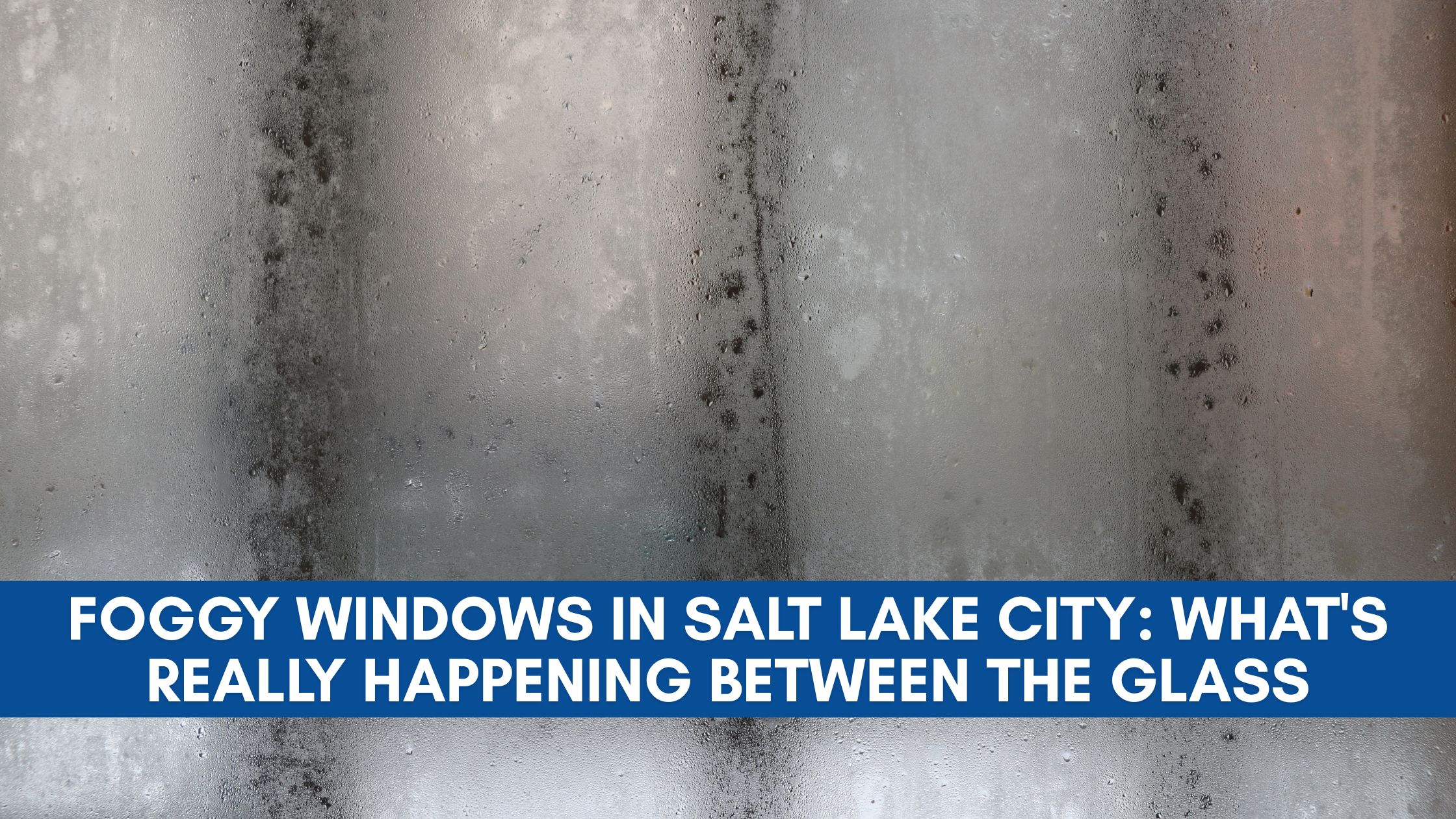
Your window looks cloudy on a cold morning. You wipe it. The fog stays. That’s not dirt. That’s water trapped between the glass. It means the seal is broken.
I get calls about this every winter here in Salt Lake City. Our weather is harsh. Dry air, then damp air. Big heat swings too. All of this puts stress on a window seal. Let’s look at why this happens. And let’s talk about when a fix works, versus when you need a full window replacement.
What Is Actually Happening In There
Most newer windows use two panes of glass with a gap in between. This is called an insulated glass unit, or IGU. The gap often holds argon gas. Argon slows heat loss. A thin metal bar, called a spacer, sits at the edge. It’s sealed shut to keep air and water out.
But here’s the catch. That seal does not last forever.
Sun, cold snaps, and time wear it down. Once it cracks, damp air creeps in. Cold glass plus trapped moisture makes fog. This is called condensation between windowpanes. Once the seal fails, the argon gas leaks out too. And once that gas is gone, your window stops doing its job.
Why This Happens So Much in Utah
Salt Lake City sits high above sea level. The sun is stronger up here. Strong sun wears down seals faster.
Our days swing hard too. A 40-degree jump from morning to afternoon is common in winter. Glass expands. Then it shrinks. Repeatedly. Each swing adds more stress to the seal.
Older homes near Sugarhouse and Cottonwood Heights tend to show this first. They were built before better spacer parts existed. Newer windows built with a Super Spacer® system hold up much longer. The material bends instead of cracking.

Which Window Styles Show It First
Not every window style ages the same way.
Bay windows have more glass units side by side, so there are simply more seals that can fail, and more corners for stress to build up. Casement windows crank open and shut, and their compression seals wear down on a different schedule than a fixed pane does. A double-hung window has two moving sashes stacked on top of each other, which means twice the seal points in a single frame.
None of this means one style is bad. It just means where you’ll spot fog first depends on what’s already on your house.
Repair or Replace? Here’s My Simple Test
Some folks ask if they can just “dry out” the fog. Short answer: no. Not for good. The seal is still broken. Damp air will creep back in. It may look clear for a bit. Then it fogs again.
Here’s what I look at first:
- Just one or two foggy windows in an older home. A glass-only swap can work if the frame is still solid.
- Several windows fog up around the same time. That’s often a sign of a bad batch. A full window replacement tends to pay off more here.
- Windows over 15 years old. Most seals in the house are near the end either way. Fog may show up next.
- Higher energy bills along with the fog. Your energy efficient windows have lost their gas fill. You’re paying for that gap every single month.
I’ve seen folks pay to fix one bad pane. Then the window right next to it fogs up six months later. Now they’re paying twice.
What a Broken Seal Really Costs You
A foggy window is not just an eyesore. It’s a broken heat barrier.
Once the argon leaks out, the glass loses its edge. Your furnace runs longer. Your AC works harder in July. Trapped moisture can even wear down the seal near the frame too, not just the glass.
One client in Draper had four windows fog up within a year and a half. Her power bill had jumped almost 18% before she called us. New windows with a full lifetime warranty solved both problems at once.
This isn’t just a window thing either. Entry doors with glass panels use the same kind of sealed unit, so a foggy sidelight or a drafty door often points to the same root cause. If you’re noticing both, it’s worth having your door installation checked at the same visit.
Pick Something Better When You Replace
If you’re replacing a window anyway, use the moment. Don’t just match what broke. Add a Low-E coating. Add a better gas fill. Add a tougher spacer. These add little cost now. They pay off for years.
Read more in our guide on Low-E glass and high-performance window design. Comparing frame types too? Our guide to vinyl window frames covers how each holds up against Utah weather.
Frame material matters here too. Fiberglass barely expands or shrinks with heat, so it puts less strain on the seal beside it. Standard vinyl is the budget-friendly middle ground, and aluminum frames suit a more modern look if that’s the direction you’re going. And if you’re not sure where to start, our full window options page breaks down every style and line side by side, including the M3 A-Series, GL-Series, and S-Series product lines. Building new instead of replacing? Our window supplier page covers what we offer for new construction.
A Quick Check You Can Do Right Now
Try this before you call anyone.
- Look at where the fog sits. Is it between the panes, or on the surface? Surface fog is just room humidity. That’s not a seal problem.
- Turn on a fan or dehumidifier. Room-side fog will clear. Fog between the panes never clears on its own.
- Check the window’s age. Past 12 to 15 years with fog between the glass? That’s a strong sign it needs to go.
- Look at nearby windows too. Even faint fog matters. A broken seal rarely stays alone for long.
Time to Call In Help
Confirmed it’s fog between the panes? Get a window replacement quote. Skip the patch job. A proper window installation, backed by a true lifetime warranty, means you won’t face this again for decades.
Got more than one old window to deal with? Our guide on timing your window replacement can help you plan the project around your budget and the season.
Frequently Asked Questions
Can foggy double-pane windows be fixed without full replacement?
Sometimes. If just the glass unit failed and the frame is still solid, a glass-only swap can work. But most broken seals mean the whole insulated glass unit needs to go, not just a wipe-down.
How long until a window seal fails?
Good seals often last 10 to 20 years. Cheap builder-grade glass, or glass that sits in full sun all day, can fail in as little as 8 years. Our guide to energy-efficient windows covers what shortens a window’s life.
Does home insurance cover foggy windows?
Usually, no. Seal failure counts as normal wear, not sudden damage. Most policies leave it out. Storm damage is a different case.
Will one new window look odd next to my old ones?
Not if the glass and frame colour match. We match your specs during your free estimate, so the new window blends right in.
